Thursday, 22 October 2009

Inside Our Heads: Collages (IUSB)

Thanks for all the recent updates on the blog! Here are some images from class today. This is a class on Narrative Collage and Surrealism, so we used magazines to practice some Surrealist techniques of transforming place, shapes, proportions, and images. After our midterm next week, we'll post some "Exquisite Corpse" writings about South Bend, Indiana.

(posted by Kelcey Parker, IUSB)


Monday, 12 October 2009

Facebook site

Dear All,

Just a quick note to say: remember that there's a related Facebook group for this blog. Please join it if you can at the following address:

http://www.facebook.com/home.php?ref=home#/group.php?gid=63866066973&ref=ts

Thanks, Jonathan

Sunday, 11 October 2009

Welcome from Jonathan at DMU

Dear All,

I just want to echo Simon Perril's words below, and welcome everyone to this blog from both sides of the Atlantic. This is a great virtual space to publish and share work from and about places distant in geographical space (and even time).

Places are geographical spaces, but they're also memories, histories, moments, relationships, representations, texts - and this is what makes them so powerful as starting-points for poetry, fiction, memoir, scripts.

So I look forward to reading your work, and wish you all the best for the new academic year.

Jonathan Taylor (lecturer, DMU).

P.S. to help 'set the ball rolling' for the year, here is something I wrote on my Summer holiday in Cyprus this year:


CYPRIOT DIRECTIONS

... no, you go slow-slow long the road –
the big one that is going to Limassol –
and is few miles,
and then is turn left from roundabout
which does not have Church
of St. Nektarios on it,
and ....

... no, I not knowing number of exeet,
but it certainly no have church
or saint on it,
and you going left,
and some other turns also –
left-right and such –
and when you get to hospeetal,
ring up on thees number,
and ....

... no, I not knowing hospeetal name,
but ees not big one where
cousin Thekla having ankle broken –
it is near there,
but if you see the Orphanides,
or Father Stavro playing the backgammon,
you know you going too far,
and ....

... no, I not knowing street name,
but is right or left where
Uncle Vassou smoked last Cubans
he save from old farm,
when you were five
and when he still have old donkey
from village, and ....

... no, not his wife, donkey,
you remember?
It called Robinou,
and lived its last years looking sad,
tied in Limassol car park,
where people being kind
and feeding it the artichokes,
but Sotiroulla ate one of them,
and she had ache of stomach for two days,
and it was from that other Stavro –
not the backgammon one –
and he was trying to poison Robinou
to get the parking space,
and we so cross
we almost wish he one of the Lost,
and ...
and ...


... and no, endaxi,
I not very kala at maps –
seence I made to come south,
I forgetting the way everywhere –
seence I leave Athankou,
seence that 1974,
I no finding my way anywhere,
I no finding my way back.

Tuesday, 6 October 2009

Lifting Spirits


By Morton Piercewright -

I very much doubt that the designers of this park envisioned this occurring, and I doubt even further that they saw the hundreds of possibilities for human movement its architecture and apparatus offered.

Darkness consumes the scene, observers from the neighbouring tower blocks and houses can only see obscurities – a flash of movement here, a shadow there. From the ground floor figures are barely visible through the thick gloom of the evening. Crisp night air hovers in a deathly silence over the soft tarmac and cool steel frames of the playground. Hooded youths fly gracefully and silently through the air over these obstacles, treating them as means to move, rather than means to guide them, or to slow them down. They have the utmost respect for the structures, but spare none for the values they represent.

Fingers wrap tightly around metal bars, pressing palms against icy contours as the body is forced skyward, pivoting from the wrist. Another hand joins the first, both now labouring to force the body forwards, keeping the incredible amount of momentum going through the night sky. Legs spin inwards, tucking in order to endure the force of the landing as the shock spreads from toe to thigh to shoulders. Coming out of the roll at incredible speed, eyes and teeth dart out from underneath the hood, a defiant grin sneaking out from its darkened face. The hooded creature spares a fleeting look behind him, a signal that is noticed by the others. Seemingly crawling and dropping from the black air itself, five more hoods creep into the light, their eyes the only thing visible in the dim saffron glow of on old streetlight. They are as spirits, gently floating over the structures society has presented before them - not as members of that society, but as outsiders.

The leader feels the grind of the harsh concrete under his feet, against the feeble rubber-soles of his trainers. His laces are frayed, ruined from constant movement and abrasion against every surface imaginable. Frozen wind gnaws through his clothes to feast upon the fragility inside. His muscles ache, they twitch at the adrenaline coursing through them with familiar distain, and they work harder than they should. Gravel grips to the soft flesh beneath his fingernails, and blood leaves a grim trail across sleeves, legs, and obstacles, a sign that he has been here before, and that he is not afraid.

Leeds Cockpit

By Samantha Nicholson of DMU

The place I am about to describe to you is not exactly perfect. In fact if I am honest it is a dump. The floor is sticky, the toilets stink, and the beer is crap.

However, some of the best times of my life were spent here. I'm sure everyone has that place: their gig venue. This is mine. My first small gig near enough.

I don't remember the first gig I saw here. I can remember one of the most memorable though. It was The Army Of Freshman with my best friend at the time Elly.

That's me and Elly right there. We're sitting outside the venue against a wall thats rather wet. You can see the tell tale sign of music and it's rather funny. We're listening to The Rasmus on my Ipod. Funnily enough nearly exactly 12 months later, we'll be in the same position, listening to the same song, about to see another band.

Outside the venues not as nice as inside. The drains run close, and make the ground wet. You can't tell from my face, but my backside is wet and I'm not happy.

We were still in college, and it was one of the first gigs I saw without my Dad. Very odd really, that that place underneath a railway line can hold such a memory. Getting in and not being IDed, crushing our bodies against a stage that is reminiscent of a few old beer crates. The room is airey, and sound will echo everywhere, even in this room, the smaller one. We're squeezed down beside a little bit of the stage that extends into the audience, right infront of some speakers. You'd think our ears would blow.

We survived just.

On the left you can see part of the wall behind me, and a rather fetching man on my arm. He is the guitarist in Army Of Freshman, and both myself and Elly got to meet him, stood infront of the promo material for pringles and Jack Daniels. It makes me smile that we directly managed to block the huge Slam Dunk Poster. Apologies for the bad quality of the photograph, however it is the only photograph.

Still, when you have memories of one particular place, you don't care how bad the photograph is. Eventually, your memories will fade to even worse than any photograph. All you will have of each place, is the photograph.

In a sticky floored, urine smelling, dump like The Cockpit, all you can do is smile, as you know you are you and no one else. It will always be just you, the bar, your friends and the music.

Barcelona: The Beauty of The Under Belly

By Samantha Nicholson of DMU


You may be wondering why I've chosen a picture of the Salvador Dali Museum to present Barcelona. That is very simple. I only have a few memories of Barcelona, and I care to forget most of them. During my trip in 2007, with a group of 25 girls from College, everything that could possibly have gone wrong happened. The worst being when we were mistaken as prostitutes in a resteraunt, and almost herded off by a group of men. It is terrifying to say that we were accompanied by five supervising college tutors.

While this does make me question the thoughts of said college tutors who chose the location, it does make me wonder how a place with such beauty, including La Sagrada Familia and Park Güell, can hold such dark and ugly secrets. Maybe it is just in built into society to have one part of their culture, that they should brush under the carpet? Maybe every country has one place where they would just rather not let tourists go.

La Sagrada Familia, Park Güell, Dali Museum, Piccasso's gallery, and The Magic Fountain of Montjuic...All of these areas are kept pristine and in perfect condition for the viewing public, with police on every corner, and someone there to protect you if you should get into difficulty.

Why is it they allow so many areas to fall into disrepair? Crime rates sour and tourists are afraid to turn their back, and feel they have to hide their money rather than risk taking it out to buy a souvineer. Maybe Barcelona is just one place that has scarred itself for me, as I will never feel safe going back.

Images: Centre: Dali Museum & Theatre, Top Left: Park Guell, Bottom Left: La Sagrada Familia

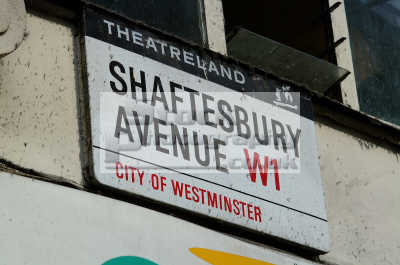
London - Theatreland

By Samantha Nicholson of DMU

Recently I was in London for a three week period on work experience. I was for the first time able to experience the full walk of Shaftesbury Avenue, aptly named Theatreland.
Yes I have been there before, on one occassion while in year 9 at high school to see Blood Brothers. This time was very different. I was alone in the middle of a vast expansive world of adult bars, theatres and chinese food. This blog has inspired me to look back on the visit, and share this poem. See if you can name the shows that I have mentioned:

Streets lined left and right
with giant shoes,
statues,
golden pathways draped in song,
Bellowing music from every corner,
bathing the darkness with light
which slips from stage doors
cracked open just an inch.
A women stands under the wicked witches face,
and she smokes a cigarette in silence.
You stand beneath a French man's giant banner,
staring into the glittered hand of a man not yet dead,
and contemplate the ticket in your hand.
The naked beckon from a dark alley,
while the corsetted call from their theatre door;
"Come join us."

Saturday, 3 October 2009

Welcome to the New Academic Year!


Dear writers,

So we come to another academic year, and so also to another opportunity to extend our transatlantic dialogue over all things locational. Remember that this is a unique opportunity students at three different Universities, in England and America, to share writings about place. These writings don’t have to be polished short stories, poems, memoirs; they can just as usefully be informal jottings and photos that try and capture the texture of a place.

Places are so often magnets for stories aren’t they? You must all know a tale, folk legend, or urban myth, about where you grew up? There must have been a place you were told not to go to, or a place that had become so wrapped in generations of telling that it has become an almost mythical focus of attention for its community?

Or perhaps you could tell us something about the immediate environment around you? Our De Montfort University campus, England, is a microcosm of
Just how many Leicesters – very old and very new – coexist in bewildering proximity. Standing at a particularly point at the edge of the campus I can swivel round to see four different visions of the city. To my right is a brand new Law Faculty building, a wide pillar of glass reaching skyward, the building of which formed the abrasive soundtrack to many a workshop last year. To my left is a gateway into a very old Leicester; an arch heralding a cobbled street tumbling down to St Mary De Castro Church, where Chaucer was alleged to have been married in the fifteenth century. In front of me I see the ‘Magazine’, a mediaeval gateway added to Leicester Castle by the Third Earl of Leicester, around 1410. This Grade 1 Listed bulding (the subject of a poem on this very Blog many moons back by Charlotte Stevens) is marooned by the side of a road down which traffic snakes towards the brand-spanking new shopping Mecca Highcross, with its deliciously absurd motto ‘I have known Desire’.


The view behind me is of a red brick campus buildings on the left, and Trinity House on the right – which houses a beautiful old chapel in which our second year students are locked to write ghost stories. And the road trails down towards the River Soar.

If I walk a few yards to my right I come to a bronze plaque outside a University building that tells me about ‘The Whipping Toms’.


‘On this spot stood the Whipping Toms, who, on Shrove Tuesday, in accordance with the Ancient Custom, armed themselves with wagon whips and flogged anyone who entered the precincts of the Newarke. The sport was abolished by Act of Parliament in 1846’.

Hmm, a precursor of extreme sports perhaps. But what about a story in which this ancient custom is revived for modern times?

But enough from me, over to you: we all look forward to the mental travel of reading your various responses to place.

Have a good year folks! Write hard!

Simon Perril, De Montfort University, England


Tuesday, 2 June 2009

Studying abroad in America

I just recently returned from a 5-month exchange trip to GA, here are some small pieces I wrote while I was out there (I've put them into one entry to save from spamming the blog)

------

On the differences between American-English (dubbed 'anglish' by my roomie) and English-English

Before coming to America we had been warned that there would be some language barriers between us and the American students. Staying in the International Dorm (i.e. the dormitory where students on exchange/study abroad programmes lived) and being part of the International Club meant that the first few weeks were spent getting used to accents I’d never heard before, and trying to both understand others and be understood. Amusingly, it was actually easier to understand someone from South Africa than someone from the U.S. at times – for example, when people greeted me with “s’up” I was just as stumped as to how I should answer as they were when I greeted them with “y’alright?”

The differences in spoken English were great sources of amusement throughout the five months I spent in Georgia. A week after we’d arrived, I was asked the question, “how do y’all say ‘goodbye’ in England? ‘Tally ho’?” My roommate and friends also found the way I pronounced words like “what” and “later” very entertaining – meaning that every time we parted and I said “see you later”, a chorus of “see you lat-ah!” followed.

As well as that, J.K. Rowling has a lot to answer for. It never occurred to me that Americans would think that every Brit is practically a character from Harry Potter. Being asked to say things like “we’re on the magic train to Hogwarts!” was funny, yes, but probably one of the strangest things about differing accents and how people felt about them.

---

Twister

“Er… we’ve got to go down to the basement.”

These words, and the explanation that followed, were not something I ever expected to hear. As I followed my roommate down the two flights of stairs, both of us clutching a pillow and our stuffed animals, all I could think about was “Twister”. The film had always interested me, but now that I was possibly about to experience my own tornado, I realised that it was actually a lot scarier than I first thought.

Opening the door to the basement, we found that most of the other dormitory residents were already down there. The mood wasn’t what I expected. Students lined the two walls, leaving a narrow pathway between their feet for others to pick their way down. They were talking, laughing, doing homework, surfing Facebook. The strong winds and heavy rain couldn’t even be heard. I pasted on a smile and tried to ignore the faint feeling of panic as we found a space to sit. Most people here had experienced tornado warnings like this before, but I had to explain several times that tornados are not really that common in the UK like they are here in Georgia.

As it turned out, I needn’t have been so scared. The tornado passed several miles North of us, headed West, so our area survived unscathed. And by the end of the semester, this evening basement visit had become such a common occurrence that eventually I reacted no differently to anyone else.

---

Spring Break

Within these glossy pages is the piercing ring of an alarm
set to sound at 5am but snoozed for another ten minutes.
There are yawns and half-closed eyes, feet stumbling towards
the bobcat grinning from the side of a bus.
A pot-hole filled gravel road is inside, tyres spitting stones,
the crack of my forehead against the window
as we bounce in our seats.
The blinding lights of China Town gleam,
reds, yellows, oranges merging with the white of
the Second World War’s memorial:
a fountain, water dancing under the black veil.
Over five hundred feet of marble, granite, sandstone
rises from the centre of these pages,
towering over the Capitol Building, the Air and Space Museum, the Pentagon.

------

Thanks for reading :)

Sam Pavely, DMU/GCSU

Friday, 20 February 2009

Distant City

This is work I've written in a Writing Place workshop about futuristic cities.

---------------------------------

In the centre a clock tower stands, exhibiting time forever to the wandering souls below it, who give no care for time. But that is exactly what has happened to this city; time has affected it and still does. And with it has come many people; well-known or unnoticed, each having a role in shaping the city. Where the spaces that used to be empty, they are now taken by grand buildings; some very old, some very new; shiny or dull. But nobody notices, at least they don't seem to. Nobody sees the gargoyles and angels watching over them as they go about their businesses, how their eyes always transfix upon them.

What was famous, is now lost in the myriad of the ages. They slipped away when higher powers and latest inventions were born. God used to be with these people, but they have shunned Him away like the passing craze. What has happened to faith?

Nobody cares, not anymore; what has passed has passed. It cannot be retrieved. Like time, everyone moves forward.

-----------------------------------

By Po-Yee Pang of De Montfort University

Tuesday, 6 January 2009

Students at De Montfort

Here are just a few of the students on the "Writing Place" module at De Montfort University - taken just before Christmas.

Front row (left to right): Dan, Scott, Claire, Becky; second row (behind): Chris, Hayley, Paul, Elena, John, Nick.


Front row: Hayley; second row (left to right): Hester, Sam, Louise, Po, Kimberly; back row: Jordan, Becki, Tom, Georgia.


Front row: Graeme; second row (left to right): Tom, Alexia, Lauren, George, Nathan


Sunday, 16 November 2008

Smoky Mountains

My parents took me to the Smoky Mountains when I was 9 years old. I remember getting out of the car and tipping my head back so far to look at the looming pyramids that I could feel the pockets of skin wrinkle on the back of my neck. Our cabin was dark and dusty and nestled at the foot of the mountains. Through our red fabric window-coverings we could see the small town laid out before us.

Of particular interest to me was the water slide located directly behind our little cabin. It was summer and the water slide was the only thing that seemed like fun in a little village such as this one. This slide was not your ordinary slide. It started at the top of one of the mountains and ended in a pool of chlorine close to the back door of our cabin.

As soon as my dad said I could go on ahead while he paid, I was out the door. I could hear the water rushing down the mountain and the voices of children and adults alike whooshed past me and ended with a splash. I watched excitedly as I climbed the steps to the top.

I looked down from the peak at the winding groove of concrete I was to descend upon. I was then handed a blue piece of spongy material, told to lie on my stomach and hold on. I did.

The first blast of water hit me from behind so hard it forced a scream from my throat and my sponge and me down the mountain. I was surprised when I came to a complete stop at the top third of my ride. Confused, I was suddenly and even more forcefully hit with a second burst of water that pushed me further down the slide. Unfortunately my sponge was taken out from under me and travelled solo all the way down to my waiting parents.

The third blast rocketed me on my bare hipbones toward the same destination as my formerly partnered sponge. The pain of my bones on rocky concrete sent chilling screams from my mouth to my parents ears. My toes, unprotected by shoes, bore down on the concrete in a futile attempt to brake my ever-increasing speed down the mountain. I could see my parents running to meet me where my horrific ride would end, terror written on their faces.

I hit the pool with a titanic force but it was like being baptized. Under the water, despite the sting of chemicals in my wounds, I had been cleansed, enlightened and there was no more horror, if only for a minute. I breathed out from my core into the thick, syrupy water all my pain and hung in mid-air until my lungs ached for oxygen.

When I emerged, I stood crying in the chest-deep water before my parents, my blue sponge floating peacefully next to me. I got out of the pool and saw the faces staring at my body. Two protruding, milky bones lay atop the bottom of my bikini while streaks of blood made their way down my legs to mingle with the blood spilling from the knuckles in my toes.

I had made my way down my first adult water slide and my dad said, “I ran as fast as I could and your mother still got to you before I did”. My eyes had been opened.

by Amy Irons, IUSB

Wednesday, 12 November 2008

Untitled Work In Progress.

He opened his eyes and was greeted by the sky. A sky deeper and wider than any he had seen before. Impossibly vast and richly orange, streaked with crimson wounds, as if scarred by the claws of some colossal beast.
His hands clenched around the ground behind him, it shifted and flowed between his fingers. Sand? So he was lying on his back, that much was sure, although little else could be. Why was there sand? He listened for the sea, but it was either not there, or was holding its breath.
With great labour he tilted his head to the left, the movement causing his brain to swill inside his hollow skull like water. Once his mind had settled into its new position he reopened his eyes in order to survey the latest vista offered to him.
Mountains frowned at him from the horizon, their faces squinting to make out the solitary figure lying face up in the sand; an intruder in this, their realm. It was their shadow that covered the desert when the fat orange sun set behind them and their dominion went perpetually unchallenged. So who was this infiltrator? Who dares to come here and lounge in the sands with not a care in the world? Did he not know that this country was mountain kingdom? A place where such slovenly behaviour was held in the highest contempt.
From what he could see, the sun was in transit, the tangerine glow of the sky was evidence enough of that... But up or down? Was he gazing into the east or the west? Time will tell, he supposed, but he needed a new activity to pass said time. After much silent deliberation he decided to try and roll his head across to the right but after several moments of excruciating effort he was once again facing skywards and possessed not the energy to continue his rotation.
Instead he endeavoured upon a new quest, he decided to attempt to speak. Not with any intent to communicate (he was quite certain he was alone in this place) rather to ascertain whether his vocal chords had failed him as well as his muscles.
“Where am I?” Was all he could muster before bidding consciousness goodbye as it left him once more.

Jack McManus

God's Patio

The city is ancient
This is but the newest layer.
Remnants of the archaic
Sprout up through cracks in the new.
Like weeds in God’s patio.

Trendy flats and
Yuppie bars fail to mask
The throbbing pulse of a living place steeped
in a history
That locals would rather hide.

But here and there,
It breaks through.
Redundant watchtowers survey
Whilst exhausted gargoyles stand guard
Against evil spirits long since retired.

Behind the tourist façade
You can count back the years
Like the rings of a tree.
Shells of industry, scraped empty and left
Hollow and daubed
With the anonymous signatures
Of those who are yet to forget.

I walk here; Not as a native,
But a denizen nonetheless.
This place of three years exile
Has become home.
And I feel as much a part of it
As the ancient walls that once defended it.


Jack McManus

Tuesday, 11 November 2008

Gus and Snow

I remember walking down to the lake with Gus. The snow had fallen over night and was still gently swirling in the air around us. Gus was a big dog. He stood well over six feet on his hind legs, and his belly easily cleared three feet when he was on all fours. The snow was up above his belly, and he had to plow through it. He loved it.

As we made our way toward the lake’s edge, I gazed at the snow bedecked trees, their braches overfull and sagging heavily. This morning they had been spun of fine glass and were etched into the frosted air. It was as if they existed partly in my world and partly in a world of myth or fantasy. The word had become white and ice, and it was alive with a crystalline beauty.

Nothing moved except Gus and I as we wandered through a world that had transformed into something magic and fragile. He would occasionally bounce over a drift and fling the snow playfully at me with his hind feet, but mostly we walked and stopped to take in the fleeting beauty. Catching my breath and stealing it away to dance with the frost, the wind was our constant companion. It played with my hair and whispered of mysteries just out of reach.

As we cleared the trees, we were not greeted by the familiar sight of the water. It had been covered by a vast blanket of snow. This great plain of virgin snow had stolen the lake. Nothing stirred on that plain and the wind hurtled across it and howled a lonely wail.

by Ann Galvin, IUSB

Monday, 3 November 2008

Damage, Death, Sadness and Quiet in New Orleans, Louisiana

In November of 2005 I took a horrifying walk through the devastated city of New Orleans after Hurricane Katrina had hit. One of the first things that I noticed was that there were not as many people around when I last visited. The city used to be lively and full of happy people, but this time the few people I saw were just focused on getting through another difficult day. The streets lay quiet and full of the depreciation of businesses that once were bustling with customers. As I walked along, I saw that the water damage was definitely eminent in certain areas. There were water lines on the structures of buildings and on the exposed walls of residential housing. The air even smelt of mildew. Walking further, I became aware of all the garbage piled on corners and on the front lawns of houses. People were outside trying to pick through it all to see if anything of value had been thrown away.

I went down a street that I visited years ago that had gorgeous houses and a picturesque view of the ocean from their backyards. Kids used to play in the streets laughing and parents used to sit on the front porches chatting with neighbors. This time when I walked down the street I instead saw just the structures of these houses, furniture thrown on the front lawns, and FEMA trailers on some properties. The beautiful view of the ocean was overshadowed by the horrifying destruction that hit this street. On the walls or on the front doors of the houses there were spray painted numbers indicating the deaths of the people who lived there. One house read “3 dead and 1 dog”, which meant three people and one dog were found dead. It was hard to keep my composure and I began to hate the view of the ocean that lay before me. It was a constant reminder of why things were the way they were in New Orleans.

One of the last places I visited had to be in the car, so I went for a drive. The highway that leads right into the city was one of the ways that the water from the levees spread so fast. As I drove along I saw the water damage on the dividers and on the trees that surrounded the highway. When the first levy had given way for the water to invade the city of New Orleans, there were some cars on the road with people in them. I tried to imagine what these people were thinking of when they saw millions of gallons of water approaching them, but I did not want to picture it. It was unimaginable.

This city was full of sorrow and of destruction. Even in November of 2005, not much had been done to help the people of New Orleans. The area that once was full of happiness, music, culture, and life was now full of damage, death, sadness, and quiet. Hurricane Katrina had taken its power to the fullest extent on this city and it would be a long time before it would ever be the same.

By Victoria Ebbinghousen of SPC

Untitled


142 Vroom St., Jersey City

Photo by Carmin Aguiles

This is a local Egyptian place near campus. On any given day you can spot some of the English Club members, as well as other SPC students puffing away hookah or munching on pitas and hummus. Our goal is to get Dr. Wifall to come along with us. We have not figured out how to yet, but a plan is in the works.

Please feel free to add your stories here.