Thursday, 5 November 2009
The Wrong Stop, by Jack O'Sullivan (De Montfort University)
Wednesday, 4 November 2009
CAPES
Simmering sun, dipping down out of view,
Allowing the winter moon to debut.
Twelve travellers, each perched on a rain-sodden pew,
Some old and some young, a right motley crew.
Twelve succulent steaks of Kangaroo,
Sputter and sizzle on a barbecue.
A cold beer, ahhhhh!, that’s long overdue,
The haunting call of a didgeridoo.
Waves gentle and glimmering, seducing the sand,
The crisp winter breeze, boats bobbing unmanned.
A barefooted stranger, surveying the land,
Aboriginal art etched onto his hand.
Through silver smoke he enters without hesitation,
The travellers fall silent, not one exhalation.
Eyes out on their stalks, in awed fascination,
Hairs standing on end with tense expectation.
He chants in native tongue, for nature uprooted,
Longing for the past, the lands unpolluted.
Flowers in bloom, waters undiluted.
Weeps for his country, his people persecuted.
By Amy Wilson, DMU
Tuesday, 3 November 2009
The Statue's Secret Smile
Nobody knows it, but you've got a secret smile,
and you use it only for me
Nobody knows it, but you've got a secret smile,
and you use it only for me
It may seem crazy, that im singing to a statue
The people around here throw dirty looks at you
But she's here all the time, I'm sure that you've seen
She's made out of metal, all lit up and green
She sits at the crossroads and watches the traffic
the brawls in the pub, now I wont get too graphic
The buildings tower over her, casting their shadows
But she's not moving anywhere what else does she know
But she can see, the soul of the city
She's watching me, with a smile with some pity
Nobody knows it, but shes got a secret smile,
and she'll use it only for me
They say the walls have ears but, what if this statue could speak
Oooh no...
But she can see, the soul of the city
She's watching me, with a smile with some pity
Nobody knows it, but shes got a secret smile,
and she'll use it only for me
(Written and performed by Morton Piercewright from DMU)
(Thanks to Semisonic for the "Secret Smile" Chorus)
Peace :)
I walk alone
I’m here now. I can’t do this, it’s not right. I run my fingers along the bar; it pierces through, injecting me with a shiver. Peering over, I wonder how many people have stood here, like me, and thought the same thoughts as me.
The rippling black treacle looks so enticing. Rusty autumn leaves infuse colour into the river. I feel my eyes widening as I taking in the details of my last surroundings I shall see. The willow trees hang over the river as I do, being drawn in and enticed, but resisting, like they’re trying to pull away. I pull back a bit. I don’t have to do it right now; I should take in my final surroundings a bit more. Hovering down the stairs, a lonely dandelion winks at me amongst the fallen leaves. It’s trying to escape from the shadows that surround it.
As my feet grind along the toe path I realise that I am alone. Not just away from the crowds of people, but I really am alone. A solitary swan floats beside me, as if drawn to my solitude. He’s floated away from his crowd; I can see them in the distance. They’re crowding round, fighting for scraps of bread being tossed in by a woman. It looks to be almost routinely to her. I wonder why he’s chose to come to me, I haven’t got anything.
It’s time. I somewhat slither back up the steps, as my legs tremble like jelly beneath me. Clasping onto the bar, this time I’m injected with heat. My fingers tremble as they tie the weight securely to my waist. I place it on the bar and wedge my feet into the diamond patterned bridge and I heave myself up. Here I squat like a frog; I can feel my knees vibrating near my ears. Eyes wide open, I clasp to the weight as I float into the darkness with the weight by my side.
Sharon, DMU
Monday, 2 November 2009
A Soar Life
There are twelve steps leading down to our bench. Joe would count them often. He would take my arm and gently guide me through crunched leaves and spots of sunshine, then away from unfavourable youths and long since littered gum. He’d get to the final step and pretend to trip to make me laugh. I’d try desperately hard to hold the corners of my mouth shut each time he did so, though never successfully.
I always sat on the left, for Joe always preferred the other side. No, ‘preferred’ isn’t right. He made me sit on the left, for the right had an obscene word scrawled in spray paint or marker or something. I told him it made no difference: the graffiti was dry; there was no danger of it marking my coat. But Joe always insisted. He carried the bread too, as if the stale loaf would somehow weigh me down and be a burden in my hands.
Lily and George (after our own two babies, who, as they often remark, are now far too old to be labelled as such) would swim over immediately from the dense overgrowth on the opposing bank, through the darkness underneath the bridge on Mill Lane towards the smell of yesterdays unwanted wholemeal. Joe would insist on placing the bread straight into their beaks, saying that he didn’t have much faith for the purity of the thick green river. A soft whistle would escape his lips as he fed them, the same nameless tune he would sing to me as we cared for our garden, or hum gently into my neck after making love.
I often try to turn the clock back by the river. Attempt to shut out the student flats, the pubs with flashing signs and the endless stream of engine, horn and siren. I go back to our favourite time – a river not filled with cigarette butts or takeaway wrappings, but busy with the endless flow of barge and boat. A time when Joe and I would walk the cobbled lane through Castle Yard to work, (Joe would walk, I would stumble on the uneven slabs of stone – Joe was no better than me at restraining the corners of his mouth) and tease one another with stories telling of St Mary de Castro’s many lovers or the tiny priest who had the good fortune of his own custom-made entrance at the back of the church.
We’d bickered playfully about maintaining our weekend ritual of walking to our bench that Sunday, for the wind was high and a fierce storm on the horizon, Joe argued. I countered with the presentation of waterproof jackets, his golfing umbrella and a toothy smile – the latter resulting in his surrender, as always.
The rain began to fall as we began to descend twelve familiar steps and was thundering by the time we stepped off the final riser. The droplets hammered into the river causing the Soar to spray upward, passers-by started running for cover underneath the abandoned bus-stop on Western Boulevard as cars crawled by at a cautious speed. I finally admitted defeat when I saw the seat of our bench already immersed.
Turning to leave, my left hand searched for Joe’s right only to find nothing but air. I twisted back to find him still staring at our saturated bench, his head lolled forward, his hand grasping his left arm as if he were embracing himself. He drew a deep breath and then the world came to a stop as he began to fall.
I was suddenly unable to hear the howling wind; the rain seemed to slow down, the drops looking like diamonds, feeling like bricks. A shopping bag descended to the ground, a thin loaf escaped from the plastic and rolled into the Soar. The ripples spreading out into the river like passengers fleeing a sinking ship.
Sunday, 1 November 2009
The Summer House
I spiral through the washing,
up the path towards the summit.
It hides behind the gazebo, caged by
the trellises and the wall of rockery.
Mrs Taylor’s Conifer creeps over too,
golden on our side
like a lighthouse.
I leave Mum’s beds at peace these days,
letting them prosper to flaming reds and purples.
The begonias I crushed as a kid
with the array flicks of the football.
I was Cantona then.
I’m into Kesey now.
It’s never silent, the persistent wasps
and issuing from next door fidgeting my thoughts.
Sometimes I can read eighty plus. Then it rains,
and I’m stolen.
The slow increasing patter on the roof,
and rattles of the plastic windows.
I rise from my cushioned seat
that would suit winter so well, and step outside
onto the deck. This is a nice place to stop, as I
narrate the scents of dampening wood and flowers.
Darren, DMU
Friday, 30 October 2009
Last Walk
I turn a corner and try to blend into the crowd. Just another in a haphazard collage of hot, pressing bodies. I kick through yellow leaves, but they cling fast. Dead, brittle fingers massage my ankles: the teasing touch of a whore for necrophiliacs. I know I’m being watched. The empty eyes are everywhere, looking down from on high. It briefly strikes me that I should put on a show (dance!) for them. The ultimate in reality TV for some faceless man in front of his bank of screens.
Crossing the bridge, I dart down the steps to the river. The crowd carries on above me, marching its way to nowhere in particular. They’ve sent their scouts to keep an eye on me though. Cyclists buzz around me, herding and harrying. You can walk, but you can’t meander. Railing turns to no railing and the murky green seems to beckon me into its depths. I shun a lone swan and hurry along the bank.
Up steps again and I walk completely out of reality. As the soundtrack of blaring sirens and squealing tyres fades, I walk straight into a nightmare. Silence. Is it my nightmare? Razor wire gives way to rubble. Chunks of debris strewn (spewed?) across a bleak wasteland. The city is just behind me, but already it has gone. Is this where cities come to die? I walk on. The peace of this place is at odds with its stark ugliness. Perhaps that’s what death is.
Round another corner and dust catches in my throat. Construction. Rebirth? This isn’t a graveyard, it’s a reproductive cycle. An organic thing. Cities come here to be rejuvenated. Will I be reborn too? Right. Everybody’s spiritual nowadays. Past cars that will remain parked forever and graffiti nobody will ever read, I sense that my journey is coming to an end. I’m not tired. I’ve reached no destination. I feel satisfied though. I’m part of the city, part of its ebb and flow.
An old sofa sits in a railway arch: a park bench for the Ikea generation. I sit down and wait for the cycle to begin again.
Nick Jones (DMU)
Thursday, 29 October 2009
Campaign: Save the Bowstring Bridge (a portable campaign poster)
Save the Bowstring Bridge!
you said Leicester’s heritage
Flat pack bastards
you’re only in it for the money
I’m not being funny but you’re wanton vandals,
members of a council riddled with scandals.
Yes it’s clear that you lied
and forced THE city into cultural suicide,
you made the wrong diagnosis.
Together we must stop these absurdities,
a city without heritage
is like a man without memories.
To save the BOWSTRING BRIDGE from demolition
go to the Leicester Civic Society website and sign the petition.
The Bowstring Bridge viaduct at the junction of Western Boulevard and Braunstone Gate has been a Leicester landmark since the 1890s and is now under imminent threat of demolition.
Thursday, 22 October 2009
Inside Our Heads: Collages (IUSB)
(posted by Kelcey Parker, IUSB)
Monday, 12 October 2009
Facebook site
Just a quick note to say: remember that there's a related Facebook group for this blog. Please join it if you can at the following address:
http://www.facebook.com/home.php?ref=home#/group.php?gid=63866066973&ref=ts
Thanks, Jonathan
Sunday, 11 October 2009
Welcome from Jonathan at DMU
I just want to echo Simon Perril's words below, and welcome everyone to this blog from both sides of the Atlantic. This is a great virtual space to publish and share work from and about places distant in geographical space (and even time).
Places are geographical spaces, but they're also memories, histories, moments, relationships, representations, texts - and this is what makes them so powerful as starting-points for poetry, fiction, memoir, scripts.
So I look forward to reading your work, and wish you all the best for the new academic year.
Jonathan Taylor (lecturer, DMU).
P.S. to help 'set the ball rolling' for the year, here is something I wrote on my Summer holiday in Cyprus this year:
CYPRIOT DIRECTIONS
... no, you go slow-slow long the road –
the big one that is going to Limassol –
and is few miles,
and then is turn left from roundabout
which does not have Church
of St. Nektarios on it,
and ....
... no, I not knowing number of exeet,
but it certainly no have church
or saint on it,
and you going left,
and some other turns also –
left-right and such –
and when you get to hospeetal,
ring up on thees number,
and ....
... no, I not knowing hospeetal name,
but ees not big one where
cousin Thekla having ankle broken –
it is near there,
but if you see the Orphanides,
or Father Stavro playing the backgammon,
you know you going too far,
and ....
... no, I not knowing street name,
but is right or left where
Uncle Vassou smoked last Cubans
he save from old farm,
when you were five
and when he still have old donkey
from village, and ....
... no, not his wife, donkey,
you remember?
It called Robinou,
and lived its last years looking sad,
tied in Limassol car park,
where people being kind
and feeding it the artichokes,
but Sotiroulla ate one of them,
and she had ache of stomach for two days,
and it was from that other Stavro –
not the backgammon one –
and he was trying to poison Robinou
to get the parking space,
and we so cross
we almost wish he one of the Lost,
and ...
and ...
... and no, endaxi,
I not very kala at maps –
seence I made to come south,
I forgetting the way everywhere –
seence I leave Athankou,
seence that 1974,
I no finding my way anywhere,
I no finding my way back.
Tuesday, 6 October 2009
Lifting Spirits
By Morton Piercewright -
I very much doubt that the designers of this park envisioned this occurring, and I doubt even further that they saw the hundreds of possibilities for human movement its architecture and apparatus offered.
Darkness consumes the scene, observers from the neighbouring tower blocks and houses can only see obscurities – a flash of movement here, a shadow there. From the ground floor figures are barely visible through the thick gloom of the evening. Crisp night air hovers in a deathly silence over the soft tarmac and cool steel frames of the playground. Hooded youths fly gracefully and silently through the air over these obstacles, treating them as means to move, rather than means to guide them, or to slow them down. They have the utmost respect for the structures, but spare none for the values they represent.
Fingers wrap tightly around metal bars, pressing palms against icy contours as the body is forced skyward, pivoting from the wrist. Another hand joins the first, both now labouring to force the body forwards, keeping the incredible amount of momentum going through the night sky. Legs spin inwards, tucking in order to endure the force of the landing as the shock spreads from toe to thigh to shoulders. Coming out of the roll at incredible speed, eyes and teeth dart out from underneath the hood, a defiant grin sneaking out from its darkened face. The hooded creature spares a fleeting look behind him, a signal that is noticed by the others. Seemingly crawling and dropping from the black air itself, five more hoods creep into the light, their eyes the only thing visible in the dim saffron glow of on old streetlight. They are as spirits, gently floating over the structures society has presented before them - not as members of that society, but as outsiders.
The leader feels the grind of the harsh concrete under his feet, against the feeble rubber-soles of his trainers. His laces are frayed, ruined from constant movement and abrasion against every surface imaginable. Frozen wind gnaws through his clothes to feast upon the fragility inside. His muscles ache, they twitch at the adrenaline coursing through them with familiar distain, and they work harder than they should. Gravel grips to the soft flesh beneath his fingernails, and blood leaves a grim trail across sleeves, legs, and obstacles, a sign that he has been here before, and that he is not afraid.
Leeds Cockpit
However, some of the best times of my life were spent here. I'm sure everyone has that place: their gig venue. This is mine. My first small gig near enough.
I don't remember the first gig I saw here. I can remember one of the most memorable though. It was The Army Of Freshman with my best friend at the time Elly.
That's me and Elly right there. We're sitting outside the venue against a wall thats rather wet. You can see the tell tale sign of music and it's rather funny. We're listening to The Rasmus on my Ipod. Funnily enough nearly exactly 12 months later, we'll be in the same position, listening to the same song, about to see another band.
Outside the venues not as nice as inside. The drains run close, and make the ground wet. You can't tell from my face, but my backside is wet and I'm not happy.
We were still in college, and it was one of the first gigs I saw without my Dad. Very odd really, that that place underneath a railway line can hold such a memory. Getting in and not being IDed, crushing our bodies against a stage that is reminiscent of a few old beer crates. The room is airey, and sound will echo everywhere, even in this room, the smaller one. We're squeezed down beside a little bit of the stage that extends into the audience,
right infront of some speakers. You'd think our ears would blow.We survived just.
On the left you can see part of the wall behind me, and a rather fetching man on my arm. He is the guitarist in Army Of Freshman, and both myself and Elly got to meet him, stood infront of the promo material for pringles and Jack Daniels. It makes me smile that we directly managed to block the huge Slam Dunk Poster. Apologies for the bad quality of the photograph, however it is the only photograph.
Still, when you have memories of one particular place, you don't care how bad the photograph is. Eventually, your memories will fade to even worse than any photograph. All you will have of each place, is the photograph.
In a sticky floored, urine smelling, dump like The Cockpit, all you can do is smile, as you know you are you and no one else. It will always be just you, the bar, your friends and the music.
Barcelona: The Beauty of The Under Belly
While this does make me question the thoughts of said college tutors who chose the location, it does make me wonder how a place with such beauty, including La Sagrada Familia and Park Güell, can hold such dark and ugly secrets. Maybe it is just in built into society to have one part of their culture, that they should brush under the carpet? Maybe every country has one place where they would just rather not let tourists go.La Sagrada Familia, Park Güell, Dali Museum, Piccasso's gallery, and The Magic Fountain of Montjuic...All of these areas are kept pristine and in perfect condition for the viewing public, with police on every corner, and someone there to protect you if you should get into difficulty.
Why is it they allow so many areas to fall into disrepair? Crime rates sour and tourists are afraid to turn their back, and feel they have to hide their money rather than risk taking it out to buy a souvineer. Maybe Barcelona is just one place that has scarred itself for me, as I will never feel safe going back.
Images: Centre: Dali Museum & Theatre, Top Left: Park Guell, Bottom Left: La Sagrada Familia
London - Theatreland
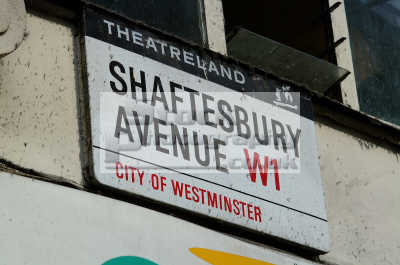
Recently I was in London for a three week period on work experience. I was for the first time able to experience the full walk of Shaftesbury Avenue, aptly named Theatreland.
Yes I have been there before, on one occassion while in year 9 at high school to see Blood Brothers. This time was very different. I was alone in the middle of a vast expansive world of adult bars, theatres and chinese food. This blog has inspired me to look back on the visit, and share this poem. See if you can name the shows that I have mentioned:
Streets lined left and right
with giant shoes,
statues,
golden pathways draped in song,
Bellowing music from every corner,
bathing the darkness with light
which slips from stage doors
cracked open just an inch.
A women stands under the wicked witches face,
and she smokes a cigarette in silence.
You stand beneath a French man's giant banner,
staring into the glittered hand of a man not yet dead,
and contemplate the ticket in your hand.
The naked beckon from a dark alley,
while the corsetted call from their theatre door;
"Come join us."
Saturday, 3 October 2009
Welcome to the New Academic Year!
Dear writers,
So we come to another academic year, and so also to another opportunity to extend our transatlantic dialogue over all things locational. Remember that this is a unique opportunity students at three different Universities, in England and America, to share writings about place. These writings don’t have to be polished short stories, poems, memoirs; they can just as usefully be informal jottings and photos that try and capture the texture of a place.
Places are so often magnets for stories aren’t they? You must all know a tale, folk legend, or urban myth, about where you grew up? There must have been a place you were told not to go to, or a place that had become so wrapped in generations of telling that it has become an almost mythical focus of attention for its community?
Or perhaps you could tell us something about the immediate environment around you? Our De Montfort University campus, England, is a microcosm of
Just how many Leicesters – very old and very new – coexist in bewildering proximity. Standing at a particularly point at the edge of the campus I can swivel round to see four different visions of the city. To my right is a brand new Law Faculty building, a wide pillar of glass reaching skyward, the building of which formed the abrasive soundtrack to many a workshop last year. To my left is a gateway into a very old Leicester; an arch heralding a cobbled street tumbling down to St Mary De Castro Church, where Chaucer was alleged to have been married in the fifteenth century. In front of me I see the ‘Magazine’, a mediaeval gateway added to Leicester Castle by the Third Earl of Leicester, around 1410. This Grade 1 Listed bulding (the subject of a poem on this very Blog many moons back by Charlotte Stevens) is marooned by the side of a road down which traffic snakes towards the brand-spanking new shopping Mecca Highcross, with its deliciously absurd motto ‘I have known Desire’.
The view behind me is of a red brick campus buildings on the left, and Trinity House on the right – which houses a beautiful old chapel in which our second year students are locked to write ghost stories. And the road trails down towards the River Soar.
If I walk a few yards to my right I come to a bronze plaque outside a University building that tells me about ‘The Whipping Toms’.
‘On this spot stood the Whipping Toms, who, on Shrove Tuesday, in accordance with the Ancient Custom, armed themselves with wagon whips and flogged anyone who entered the precincts of the Newarke. The sport was abolished by Act of Parliament in 1846’.
Hmm, a precursor of extreme sports perhaps. But what about a story in which this ancient custom is revived for modern times?
But enough from me, over to you: we all look forward to the mental travel of reading your various responses to place.
Have a good year folks! Write hard!
Simon Perril, De Montfort University, England
Tuesday, 2 June 2009
Studying abroad in America
------
On the differences between American-English (dubbed 'anglish' by my roomie) and English-English
Before coming to America we had been warned that there would be some language barriers between us and the American students. Staying in the International Dorm (i.e. the dormitory where students on exchange/study abroad programmes lived) and being part of the International Club meant that the first few weeks were spent getting used to accents I’d never heard before, and trying to both understand others and be understood. Amusingly, it was actually easier to understand someone from South Africa than someone from the U.S. at times – for example, when people greeted me with “s’up” I was just as stumped as to how I should answer as they were when I greeted them with “y’alright?”
The differences in spoken English were great sources of amusement throughout the five months I spent in Georgia. A week after we’d arrived, I was asked the question, “how do y’all say ‘goodbye’ in England? ‘Tally ho’?” My roommate and friends also found the way I pronounced words like “what” and “later” very entertaining – meaning that every time we parted and I said “see you later”, a chorus of “see you lat-ah!” followed.
As well as that, J.K. Rowling has a lot to answer for. It never occurred to me that Americans would think that every Brit is practically a character from Harry Potter. Being asked to say things like “we’re on the magic train to Hogwarts!” was funny, yes, but probably one of the strangest things about differing accents and how people felt about them.
---
Twister
“Er… we’ve got to go down to the basement.”
These words, and the explanation that followed, were not something I ever expected to hear. As I followed my roommate down the two flights of stairs, both of us clutching a pillow and our stuffed animals, all I could think about was “Twister”. The film had always interested me, but now that I was possibly about to experience my own tornado, I realised that it was actually a lot scarier than I first thought.
Opening the door to the basement, we found that most of the other dormitory residents were already down there. The mood wasn’t what I expected. Students lined the two walls, leaving a narrow pathway between their feet for others to pick their way down. They were talking, laughing, doing homework, surfing Facebook. The strong winds and heavy rain couldn’t even be heard. I pasted on a smile and tried to ignore the faint feeling of panic as we found a space to sit. Most people here had experienced tornado warnings like this before, but I had to explain several times that tornados are not really that common in the UK like they are here in Georgia.
As it turned out, I needn’t have been so scared. The tornado passed several miles North of us, headed West, so our area survived unscathed. And by the end of the semester, this evening basement visit had become such a common occurrence that eventually I reacted no differently to anyone else.
---
Spring Break
Within these glossy pages is the piercing ring of an alarm
set to sound at 5am but snoozed for another ten minutes.
There are yawns and half-closed eyes, feet stumbling towards
the bobcat grinning from the side of a bus.
A pot-hole filled gravel road is inside, tyres spitting stones,
the crack of my forehead against the window
as we bounce in our seats.
The blinding lights of China Town gleam,
reds, yellows, oranges merging with the white of
the Second World War’s memorial:
a fountain, water dancing under the black veil.
Over five hundred feet of marble, granite, sandstone
rises from the centre of these pages,
towering over the Capitol Building, the Air and Space Museum, the Pentagon.
------
Thanks for reading :)
Sam Pavely, DMU/GCSU
Friday, 20 February 2009
Distant City
---------------------------------
In the centre a clock tower stands, exhibiting time forever to the wandering souls below it, who give no care for time. But that is exactly what has happened to this city; time has affected it and still does. And with it has come many people; well-known or unnoticed, each having a role in shaping the city. Where the spaces that used to be empty, they are now taken by grand buildings; some very old, some very new; shiny or dull. But nobody notices, at least they don't seem to. Nobody sees the gargoyles and angels watching over them as they go about their businesses, how their eyes always transfix upon them.
What was famous, is now lost in the myriad of the ages. They slipped away when higher powers and latest inventions were born. God used to be with these people, but they have shunned Him away like the passing craze. What has happened to faith?
Nobody cares, not anymore; what has passed has passed. It cannot be retrieved. Like time, everyone moves forward.
-----------------------------------
By Po-Yee Pang of De Montfort University